
 English
 русский
 Français
 Español
 عربى

When you plan a container house, few choices carry more weight than the sandwich panel core material. Rock wool and EPS dominate the prefab market, but they sit at opposite ends of the fire-safety spectrum. This guide compares rock wool sandwich panels vs EPS sandwich panels for container houses across fire rating, thermal insulation, sound performance, moisture behavior, weight, and cost. By the end, you will know exactly which core material fits your project, and why the decision goes far beyond the initial panel price.
Content
- 1 Sandwich Panel Basics: What Rock Wool and EPS Actually Are
- 2 Fire Rating Comparison: The Deciding Factor
- 3 Thermal Insulation Comparison: Performance in Real Conditions
- 4 Sound, Moisture, Weight, and Cost: The Rest of the Picture
- 5 Which Sandwich Panel Should You Choose for Your Container House?
- 6 FAQ: Rock Wool vs EPS Sandwich Panel Container House
Sandwich Panel Basics: What Rock Wool and EPS Actually Are
A sandwich panel is a composite board with two galvanized steel faces and a core layer bonded between them. The steel sheets provide structural stiffness, while the core supplies thermal insulation, acoustic absorption, and, depending on the material, fire resistance. When you specify a rock wool sandwich panel or an EPS sandwich panel, you are really choosing the core, because the core controls how the panel behaves in daily use and, above all, in a fire.
Rock Wool Panel: Non-Combustible Mineral Fiber
Rock wool, also known as mineral wool or stone wool, is made by melting basalt rock and mineral slag at around 1,500°C and spinning the melt into fine fibers. The fibers are bound with resin and water-repellent additives to form rigid slabs. Rock wool is naturally non-combustible. It withstands temperatures above 1,000°C, does not ignite, and keeps its shape during a fire. Its open fiber structure also provides excellent sound absorption and vapor permeability, which helps the container house wall breathe and release moisture.
EPS Panel: Lightweight Plastic Foam
EPS stands for expanded polystyrene, a closed-cell plastic foam produced by expanding styrene beads with steam. The beads fuse into lightweight boards that are inexpensive, easy to cut, and highly insulating. However, EPS is an organic, combustible material. It softens at roughly 100°C, ignites readily above about 300°C, and, when burning, releases dense black smoke and toxic styrene gas. These few sentences explain most of the difference that matters for container house construction.
Fire Rating Comparison: The Deciding Factor
Fire performance is where rock wool and EPS diverge most dramatically. The headline is simple: rock wool is non-combustible, while EPS is a combustible plastic that contributes fuel to a fire.
| Property | Rock Wool Core | EPS Core |
|---|---|---|
| Fire class (GB 8624) | Class A, non-combustible | Class B1/B2, combustible |
| Fire class (EN 13501) | A1 / A2 | E (standard EPS) |
| Temperature resistance | Stable above 1,000°C | Softens at ~100°C, burns above ~300°C |
| Flame spread | Does not ignite | Supports combustion, molten drips spread fire |
| Smoke and toxicity | Minimal, low smoke | Dense black smoke, toxic styrene gas |
| Behavior in fire | Core stays in place | Core melts, shrinks, collapses |
Under the Chinese standard GB 8624, rock wool core panels reach Class A, the highest non-combustible grade. EPS panels with flame-retardant additives reach Class B1 or B2, but they remain combustible and can still ignite under sustained heat. Under the European EN 13501 classification, rock wool achieves A1 or A2, while standard EPS is rated E.
Bottom line: for any container house where people sleep, work, or gather, a non-combustible rock wool core is the panel option that does not feed a fire.
In standardized fire tests, rock-wool-cored panels resist flame penetration for 60 minutes or more depending on panel thickness, while EPS cores melt and allow flame breakthrough much earlier. Molten EPS drips can also carry fire horizontally, which makes flame spread harder to control in multi-unit container camps.
This safety gap is the main reason why more project owners are choosing a fireproof rock wool container house for long-term site accommodation.
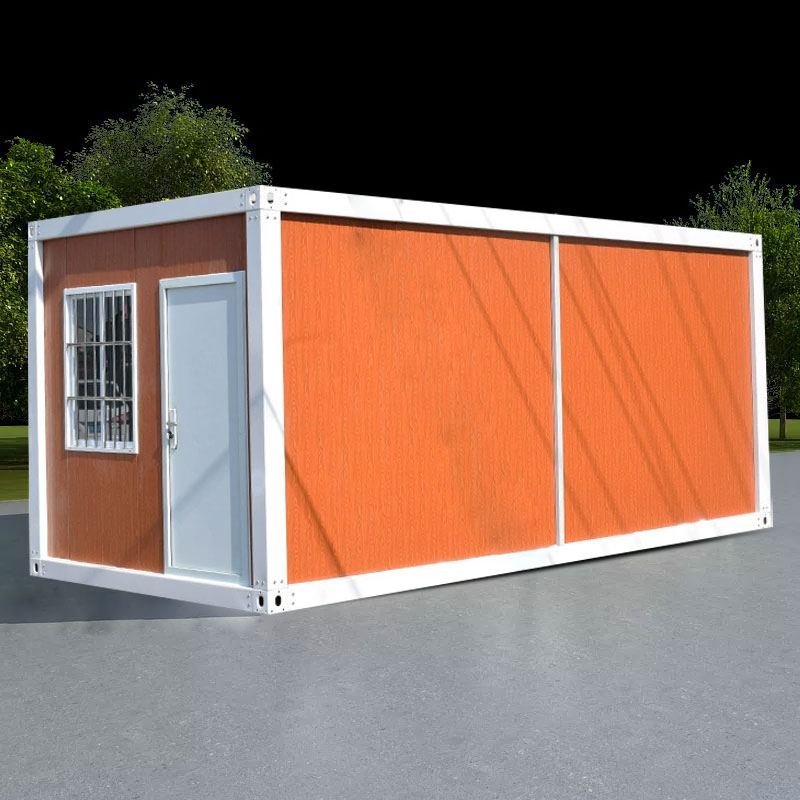
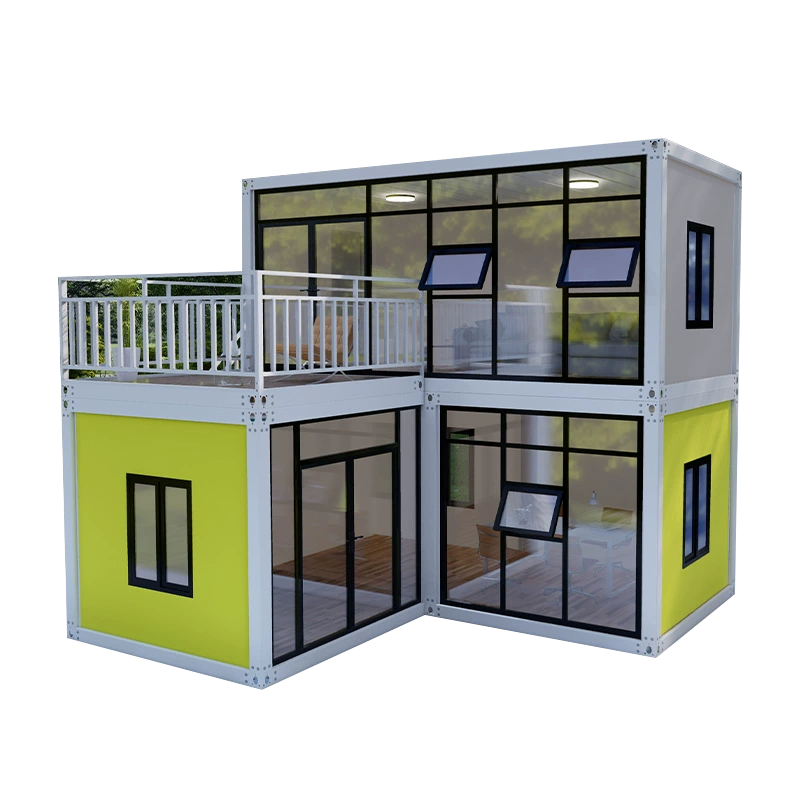 Fireproof Rock Wool Sandwich Panel Container House for Site AccommodationDesigned for long-term site housing, this container house uses a fireproof rock wool sandwich panel core, offering enhanced safety and reusability while meeting the demands of construction and remote projects.View Product →
Thermal Insulation Comparison: Performance in Real Conditions
Thermal insulation is the second most important spec, and here the two panels are closer, at least on paper. The table below compares their insulation properties.
1,000°C+Rock wool temperature resistance
100°CEPS softening point
0.030-0.045 W/mKRock wool thermal conductivity
| Property | Rock Wool Panel | EPS Panel |
|---|---|---|
| Thermal conductivity | 0.030-0.045 W/mK | 0.030-0.038 W/mK |
| Insulation per thickness | Very good | Excellent when new and dry |
| Performance over time | Stable for decades | Declines with moisture and aging |
| Operating temperature range | -200°C to 650°C | -50°C to 75°C |
| Vapor behavior | Vapor-permeable, wall breathes | Closed-cell foam, traps vapor at seams |
Why Real-World Insulation Is Not Only About the Spec Sheet
At the same thickness, new EPS has a slightly lower thermal conductivity than rock wool, which gives a marginally better R-value on paper. In real use, however, rock wool keeps its insulation value because mineral fibers do not age, settle, or compress noticeably in a properly bonded panel. EPS is more sensitive to moisture: water vapor that enters through cut edges, joints, or damaged cladding can condense inside the foam, and wet EPS loses a significant share of its insulating performance.
Summer and Winter Comfort
The dense, fibrous structure of rock wool damps air convection and absorbs radiant heat, which reduces temperature swings inside the container house. In summer, a rock-wool-cored wall keeps the interior surface cooler; in winter, it loses less heat by radiation. EPS insulation depends on still air trapped in closed cells. It performs well when dry, but it cannot manage moisture the way mineral fiber does, and poor seam sealing quickly undermines its thermal advantage.
Extreme Temperature Limits
Rock wool panels are rated for continuous service from about -200°C to 650°C, so neither cold climates nor sun-heated steel faces degrade the core. EPS is limited to roughly -50°C to 75°C. On a dark-colored container house exposed to strong sunlight, the outer steel face can approach EPS limits, accelerating foam aging and reducing insulation over time.
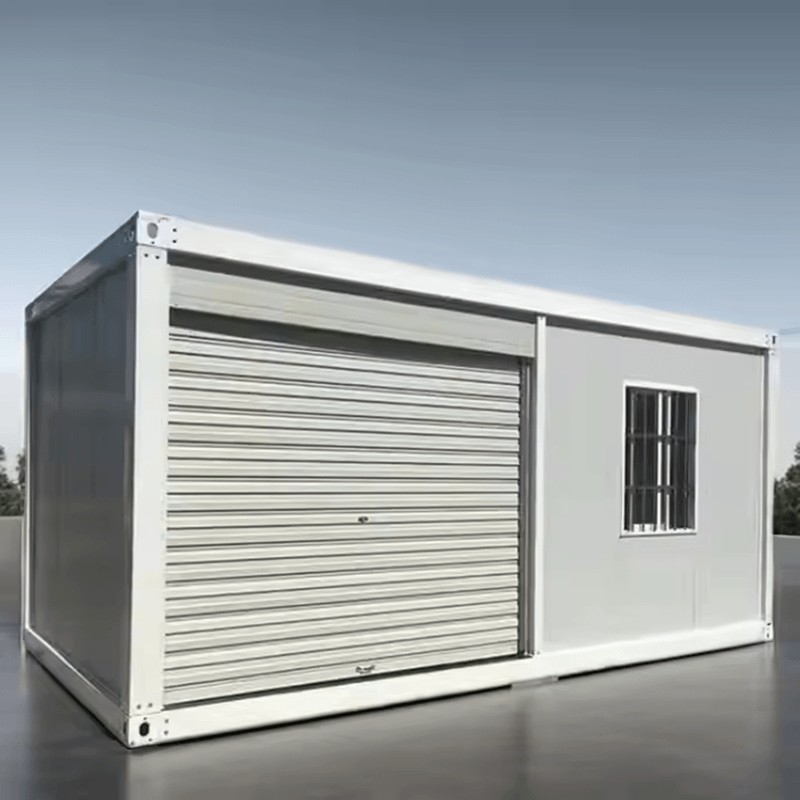
 Rock Wool Board Container House with Wide Temperature ToleranceFeaturing a rock wool board core rated for extreme temperatures from -200°C to 650°C, this container house suits harsh climates and provides fire resistance, sound insulation, and durability for various applications.View Product →
Sound, Moisture, Weight, and Cost: The Rest of the Picture
Fire rating and thermal insulation are the two big decision drivers, but four other factors affect daily living and total cost.
| Factor | Rock Wool Panel | EPS Panel |
|---|---|---|
| Sound insulation | Excellent, fibrous absorption | Moderate, tends to reflect and resonate |
| Moisture resistance | Vapor-permeable, releases moisture | Closed-cell, prone to condensation at joints |
| Panel weight (50 mm panel) | About 14-20 kg per sq. meter | About 8-12 kg per sq. meter |
| Relative panel cost | Higher, roughly 1.3-1.8 times EPS | Lower |
| Expected service life | 30+ years with stable performance | 15-25 years depending on conditions |
Sound Insulation
In a steel container house, sound travels easily through the walls. Rock wool wins clearly here: its tangled mineral fibers convert sound energy into heat, which is why rock wool is standard in walls, partitions, and recording spaces. EPS reflects and resonates more, so rain, footsteps, and voices remain more audible inside.
Moisture and Condensation
EPS does not soak up liquid water like a sponge, but condensation forms on the inner steel face when humid indoor air meets a cold surface. Rock wool's vapor permeability lets that moisture escape before it accumulates, reducing the risk of hidden mold and steel corrosion. EPS, with foam tightly glued to the steel faces, traps condensation at the interface, and dampness inside a sealed panel is almost impossible to dry out.
Weight and Transport
Rock wool panels are heavier, typically 14-20 kg per square meter for a 50 mm panel versus 8-12 kg for EPS. On a 6-meter container house, the difference adds up to a few hundred kilograms, which affects shipping and crane handling costs. The steel frame of the container house carries the structural load, so the weight difference does not change the frame design in most cases.
Full Life-Cycle Cost
EPS panels cost less at the purchase stage, often 30-50% less than an equivalent rock wool panel. However, EPS construction frequently requires extra fire barriers, smoke control, and more expensive insurance. When you add the shorter service life and the risk of moisture-related replacement, the life-cycle cost gap between EPS and rock wool narrows considerably.
Which Sandwich Panel Should You Choose for Your Container House?
Rock wool is the right choice when the unit will be used for accommodation, installed on a site with fire risks, located in a humid climate, or required by local code to use non-combustible materials. EPS can be acceptable for short-term storage, workshops, or single-story auxiliary rooms where fire loading is limited and local regulations permit a combustible core.
- Choose rock wool if people will sleep or work in the container house, if fire safety is a priority, or if the project requires the highest insulation stability over time.
- Choose EPS only for low-occupancy temporary spaces with controlled fire risk and a strict budget, and always confirm the fire class with your local authority.
As a manufacturer of both panel types, Suzhou Shengshan Prefabricated Housing Manufacturing Co., Ltd supplies prefabricated container houses with rock wool or EPS cores, in standard and custom configurations, so the decision can be made on engineering merit rather than on product availability.
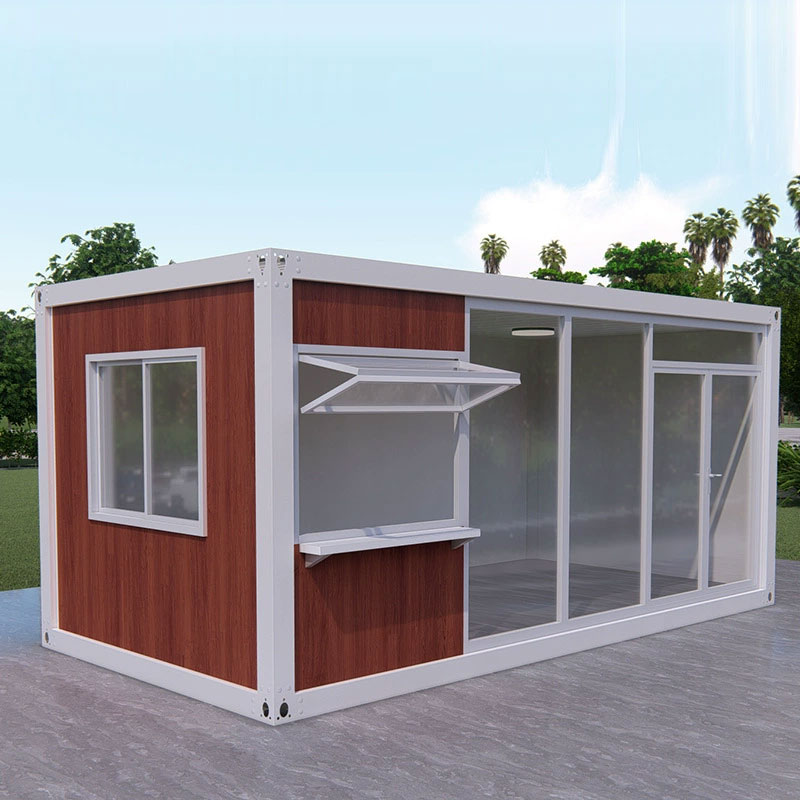
 Customizable Sandwich Panel Container House with Fireproof OptionsAvailable with rock wool or EPS cores in standard or custom sizes, this sandwich panel container house balances fire safety, insulation, and quick installation, making it adaptable for construction sites and offices.View Product →
FAQ: Rock Wool vs EPS Sandwich Panel Container House
Q1: Is an EPS sandwich panel safe for a container house?
EPS is safe only when the local fire code allows a combustible core and the building includes additional protective measures. For container houses used as bedrooms, offices, or gathering spaces, rock wool is the safer option because it does not ignite and produces minimal smoke.
Q2: What fire rating does a rock wool sandwich panel container house achieve?
Rock wool core panels are classified as non-combustible: Class A under GB 8624 and A1 or A2 under EN 13501. The fire resistance of the complete container house depends on panel thickness, steel gauge, and the performance of doors and windows.
Q3: Does EPS lose its insulation performance over time?
Yes. EPS gradually loses R-value as it ages and as moisture enters through seams and joints. Wet EPS can lose a large share of its insulating ability, and the damage is usually irreversible because the foam cannot dry quickly inside a sealed panel.
Q4: Are rock wool sandwich panels worth the extra cost?
For permanent or semi-permanent container houses, yes. Rock wool delivers non-combustible fire behavior, stable insulation, better acoustics, and a longer service life. When fire protection measures, insurance, and replacement risk are included, the life-cycle cost of rock wool is very competitive with EPS.