 English
 русский
 Français
 Español
 عربى
عربى

Content
How Much Does a Container Home Cost?
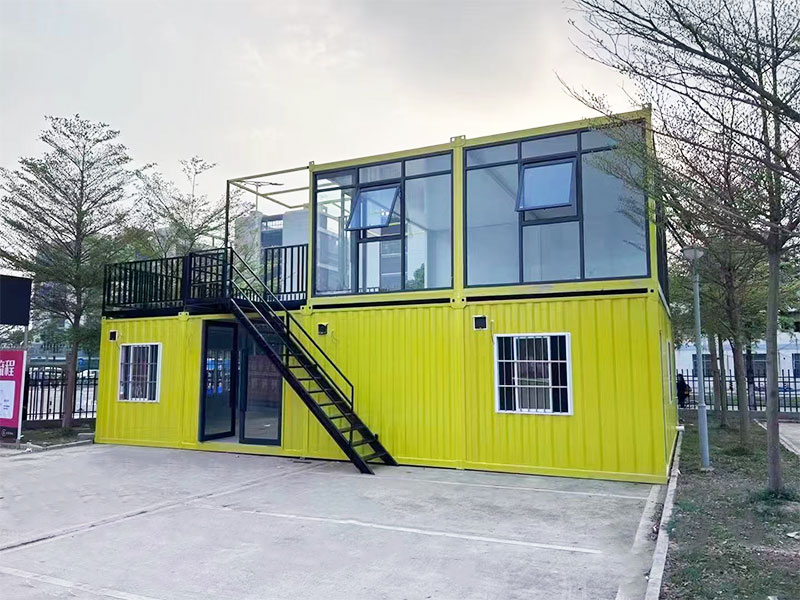
A shipping container home typically costs between $25,000 and $250,000, depending on size, finish level, site preparation, and whether it is a DIY build or a factory-prefabricated unit. That range is wide because container homes span everything from a single converted 20-foot box to a multi-container luxury residence with full architectural detailing.
Breaking costs down by category gives a clearer picture:
| Project Tier | Total Cost Range | Cost per Sq Ft | Description |
|---|---|---|---|
| Budget / DIY | $25,000–$60,000 | $100–$150 | Used container, basic finishes, owner-managed build |
| Mid-Range | $60,000–$150,000 | $150–$250 | New or single-trip container, contractor-built, standard insulation and HVAC |
| Premium | $150,000–$250,000+ | $250–$400+ | Multi-container, architect-designed, high-spec interior finishes |
The average cost of a shipping container home for a turnkey single-family dwelling (two to three containers, fully fitted) lands around $80,000–$120,000 before land and site work. Site preparation — foundation, utilities hookup, permits — adds another $10,000–$50,000 depending on location and local regulations. Purchasing the container itself is often the smallest line item: a used 20-foot container runs $1,500–$3,500; a new 40-foot high-cube runs $6,000–$10,000.
How Long Do Container Homes and Tiny Houses Last?
A well-maintained shipping container home can last 25 to 50 years or longer. The steel corten shell of an ISO shipping container is engineered to withstand decades of ocean transit and stacking loads — structurally, it is more durable than a timber-framed house in many respects. The limiting factors for lifespan are corrosion, insulation degradation, and the quality of the conversion work rather than the container structure itself.
What Affects How Long a Container Home Lasts
- Rust and corrosion control: Corten steel develops a protective patina layer that resists further oxidation, but cut edges, welded joints, and areas where paint has failed are vulnerable. Regular inspection and touch-up coating extends lifespan significantly. Homes in coastal or high-humidity climates require more frequent maintenance.
- Insulation and vapor barrier quality: Condensation inside container walls is the most common cause of premature deterioration. Spray foam insulation applied to the interior of the metal walls seals the thermal bridge and prevents moisture buildup. Poorly insulated containers develop rust from the inside out — a problem invisible until serious damage has occurred.
- Foundation type: Containers set directly on soil or on poorly drained pads will corrode at the base corners. Pier foundations or concrete slabs with proper drainage add years to service life.
- Roof treatment: Flat-roof containers accumulate standing water. A roof coating, drainage slope, or green roof system is recommended to prevent pooling and accelerated rust.
How Long Does a Tiny House Last?
A tiny house built on a permanent foundation using conventional framing methods will last as long as a standard home — 30 to 50+ years with normal maintenance. Tiny houses on wheels (THOWs), by contrast, have a shorter structural lifespan due to road vibration stress on joints and connections; most builders rate them at 10 to 30 years, with the trailer chassis and axles often being the first components to require replacement. Container-based tiny homes generally outlast wood-framed THOWs due to the inherent rigidity of the steel shell.
Pros and Cons of Container Homes
Advantages
- Speed of construction: A prefabricated container home can be assembled on-site in days rather than the months required for conventional builds. Factory conversion reduces weather delays and on-site labor costs.
- Structural strength: ISO containers are rated to support 67,200 lbs of stacking load. The steel frame provides inherent resistance to wind, seismic activity, and impact that exceeds standard residential framing.
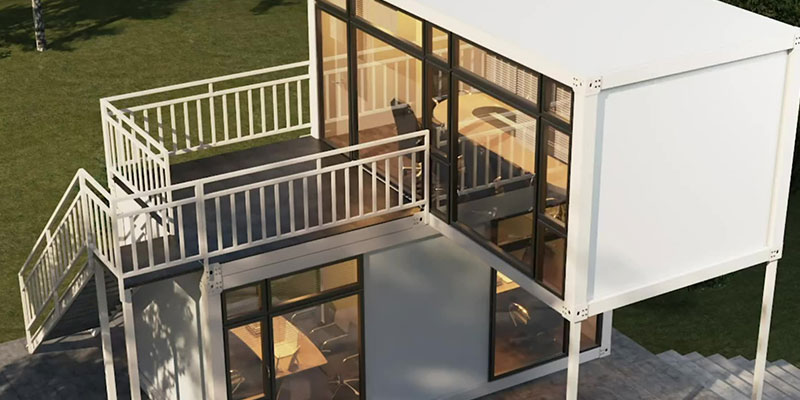
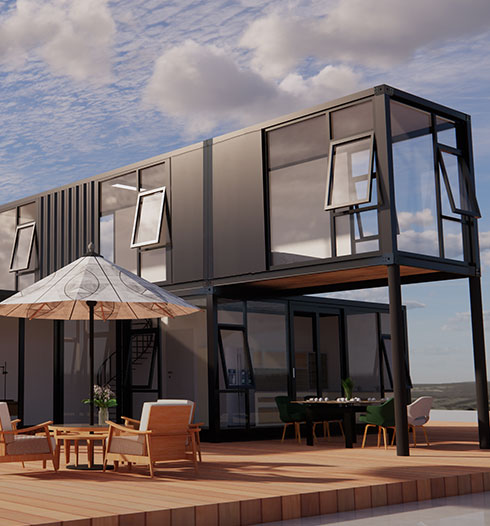
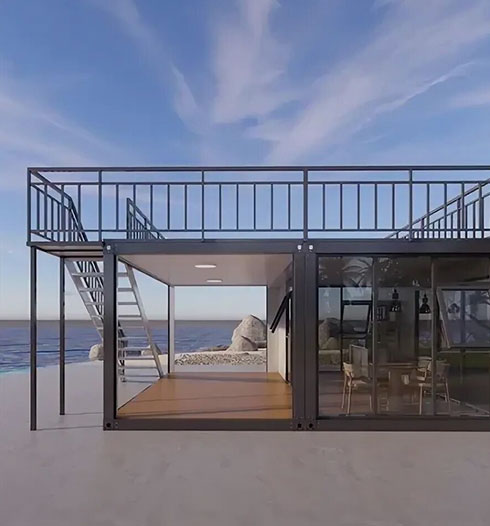
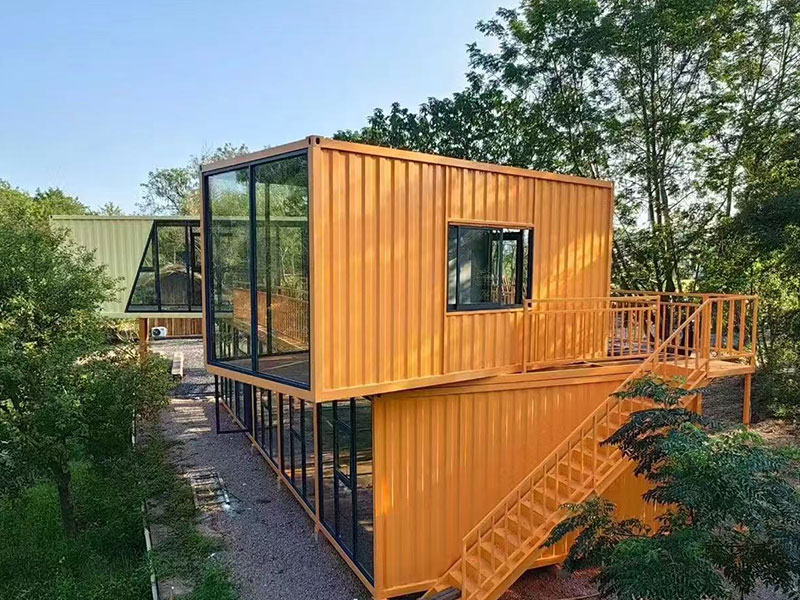
- Modularity and scalability: Multiple containers can be stacked or joined to expand living space incrementally. An expanded container house configuration — where containers are set side by side or stacked with connecting modules — allows floor plans up to 1,000 sq ft or more without a custom build process.
- Portability: Containers can be transported and relocated, making them suitable for remote sites, temporary installations, and off-grid living.
- Sustainability: Repurposing used shipping containers reduces steel waste. Paired with solar panels, rainwater collection, and composting systems, container homes can achieve near-zero environmental footprint.
Disadvantages
- Insulation challenges: Steel conducts heat and cold far more efficiently than timber. Without adequate insulation, container homes overheat in summer and lose heat rapidly in winter, driving up energy costs.
- Permitting complexity: Zoning regulations and building codes vary widely. Some municipalities have no framework for container homes, requiring variances and additional engineering sign-off that add cost and delay.
- Limited ceiling height: Standard 8.5-foot container interior height feels low compared to conventional residential ceilings. High-cube containers (9.5 ft) address this but cost more.
- Structural modifications weaken the shell: Cutting large openings for windows and doors removes the load-bearing corrugated steel panels. Structural reinforcement — additional steel beams or headers — is required for any opening wider than approximately 3 feet, adding cost.
- Chemical contamination risk in used containers: Used containers may have carried toxic cargo and could retain pesticide residues or chromate-based floor treatments. Independent inspection and floor replacement are advisable before conversion.
Shipping Container Home Interiors: Design and Layout Principles
The interior of a shipping container home can range from raw industrial to indistinguishable from a conventional house. The constraints of the container's rectangular geometry — typically 8 feet wide and 20 or 40 feet long — require deliberate spatial planning to avoid a cramped, corridor-like feel.
Strategies for Maximizing Interior Space
- Open-plan layout: Removing interior partition walls where possible keeps the narrow footprint from feeling divided. Kitchens, dining, and living areas work well in a single 40-foot container run.
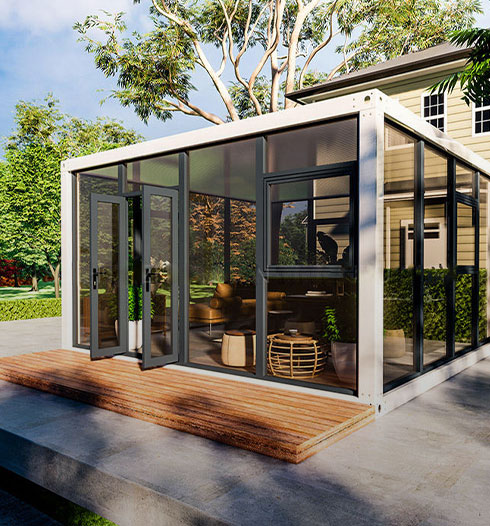
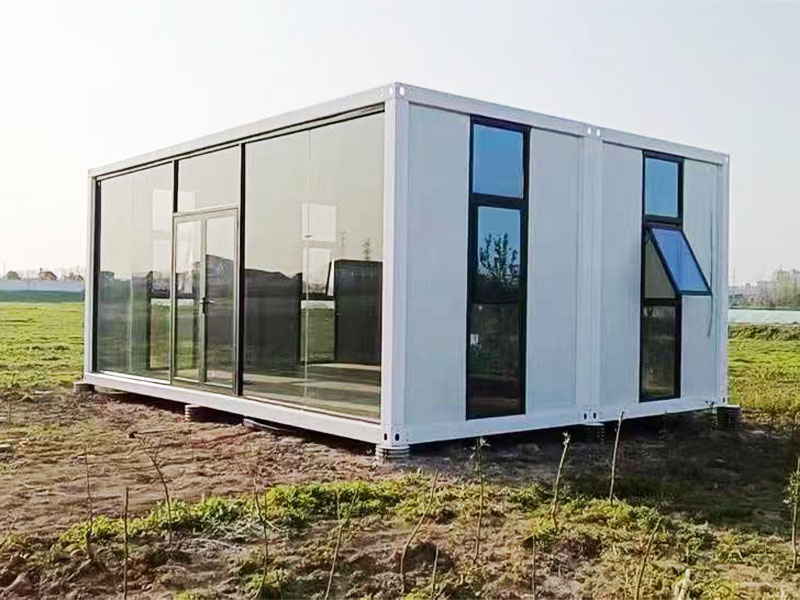
- Large glazed openings: Full-width sliding doors or floor-to-ceiling windows on the long sides extend visual depth and bring in natural light. This is the most effective single intervention for making a container interior feel generous.
- Loft sleeping areas: In high-cube containers, a sleeping loft above a living or workspace maximizes the floor plan. A low-profile loft bed at 4.5–5 feet clearance above is sufficient for sleeping.
- Built-in furniture and storage: Custom joinery fitted along the container walls eliminates the space lost to freestanding furniture. Built-in benches with under-seat storage, wall-mounted fold-down tables, and recessed shelving are standard approaches.
- Light colors and reflective surfaces: White or light-gray wall finishes, polished concrete or light wood flooring, and mirrored or glass backsplashes amplify natural light and reduce the visual weight of the steel structure.
Interior Finishes: What to Expect at Different Budget Levels
At the budget end, shipping container home interiors typically feature exposed insulated walls (spray foam left visible or covered with basic panel board), vinyl plank flooring, and prefabricated kitchen and bathroom units. Mid-range builds introduce drywall finishes over the insulation, hardwood or engineered wood flooring, and custom cabinetry. Premium interiors are architecturally indistinguishable from high-end conventional homes — polished concrete, stone countertops, underfloor heating, and custom metalwork that references the industrial origins of the container without being dominated by them.
What Is an Expanded Container House?
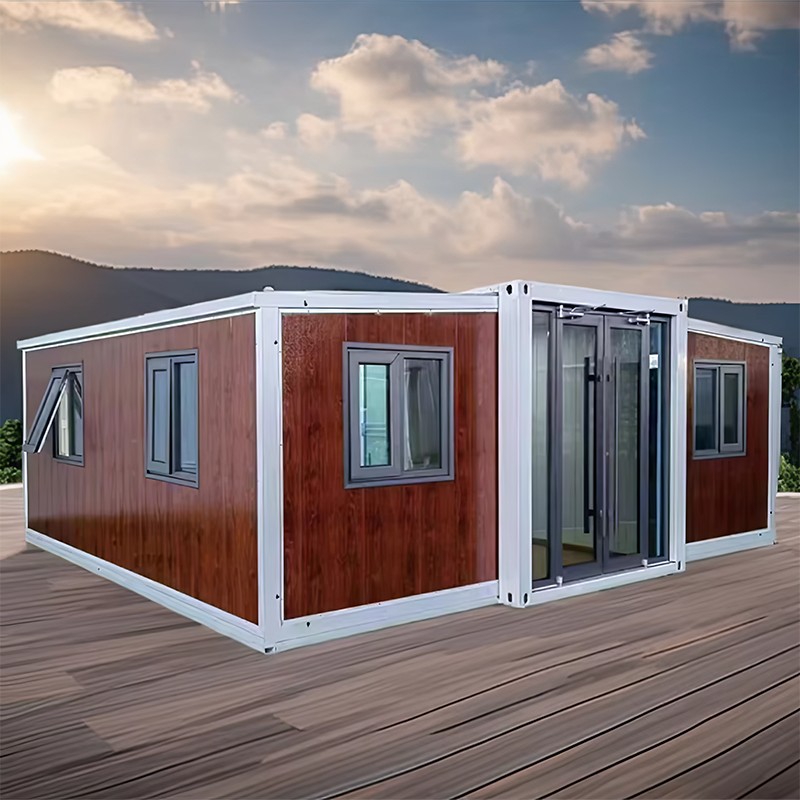
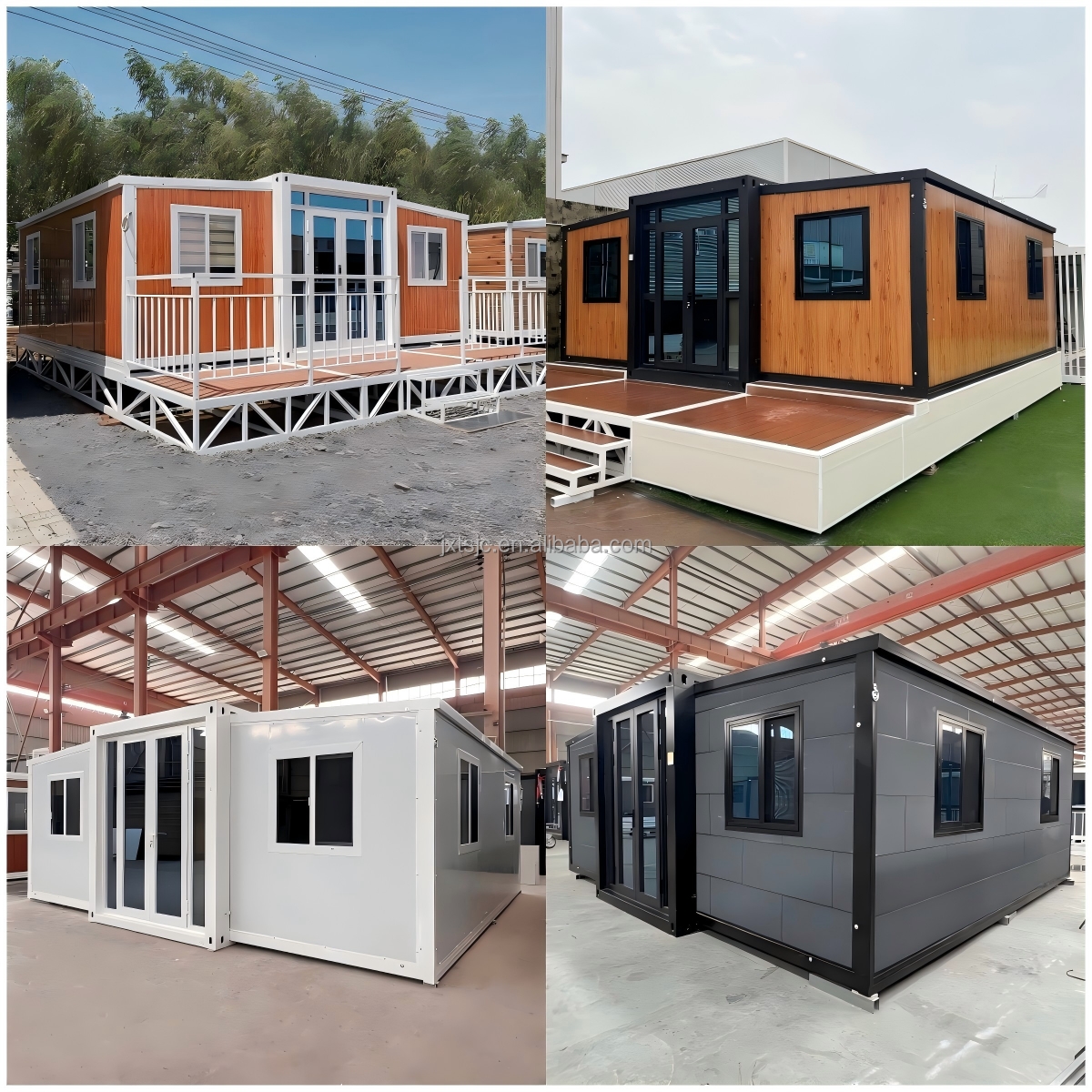
An expanded container house (also called a foldable or expandable container home) is a factory-built housing unit that ships in a compact, container-sized package and unfolds on-site to two or three times its transport width. The expansion mechanism typically involves hinged wall panels and fold-out floor sections that lock into place, creating a livable space of 20–40 square meters from a unit that arrives as a standard 20-foot ISO-dimensioned module.
How Expanded Container Houses Work
In transport position, the unit measures approximately 2.4 m × 6 m — the same footprint as a standard 20-foot container. On delivery, the side walls hinge outward and the roof panels extend to cover the expanded floor area. Most models can be deployed by two to four workers with basic hand tools in under four hours. Electrical wiring, plumbing rough-ins, insulation, and interior finishes are completed at the factory, so the on-site setup requires only utility connections and foundation anchoring.
Expanded Container House vs. Standard Container Conversion
- Deployment speed: Expanded units install in hours; a standard container conversion requires days to weeks of on-site labor.
- Interior width: An expanded unit opens to 5–7 meters wide, escaping the narrow 2.35 m interior width of a single standard container — the most common comfort complaint about unmodified container conversions.
- Relocatability: Expanded container homes can be folded back to transport dimensions and moved to a new site, making them suited to temporary housing, construction site offices, remote workcamps, and disaster relief.
- Cost: Factory-built expanded units typically cost $15,000–$40,000 ex-factory for a basic furnished model, with shipping adding $2,000–$8,000 depending on destination. This is considerably less than a full on-site container conversion at equivalent livable area.
Expanded container houses are widely manufactured in China and exported globally. They are a practical solution for buyers who need fast deployment, minimal site work, or repeated relocation — from holiday cabin installations to workforce housing for infrastructure projects.
Casas Hechas con Contenedores: Notes for Spanish-Speaking Markets
Container homes — casas hechas con contenedores — have gained significant traction across Latin America and Spain as a cost-effective alternative to conventional construction. In markets such as Mexico, Colombia, Chile, and Argentina, the combination of affordable used containers sourced from active port infrastructure and lower local labor costs makes container home construction particularly accessible. A finished container home in Mexico, for instance, can be completed for the equivalent of $20,000–$60,000 USD, roughly half the cost of a comparable conventional build.
Climate considerations differ from North American or European markets. In tropical and subtropical zones, the primary concern is heat gain through the steel shell rather than insulation against cold. Exterior insulation systems — such as insulated render or cladding applied to the outside of the container — are more effective in hot climates than interior foam, as they prevent the steel from absorbing solar heat in the first place. Roof overhangs, cross-ventilation design, and light-colored exterior finishes are standard adaptations for container homes built in warm-climate regions.