 English
 русский
 Français
 Español
 عربى
عربى

Content
- 1 What Is a Folding House?
- 2 How a Folding House Works: The Core Mechanisms
- 3 The Folding A-Frame House: Design, Advantages, and Use Cases
- 4 Folding House vs. Traditional Construction: A Direct Comparison
- 5 Primary Applications and Markets
- 6 Construction Materials Used in Folding Houses
- 7 Planning Permission and Building Code Considerations
- 8 What to Look for When Buying a Folding House
What Is a Folding House?
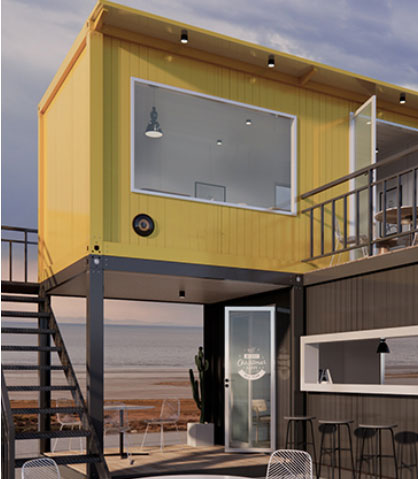
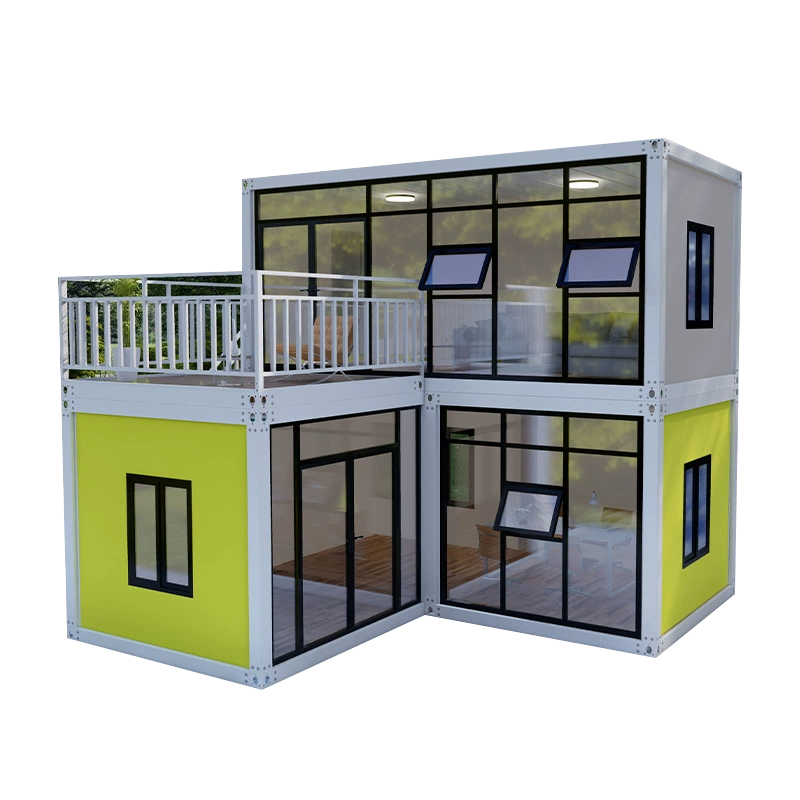
A folding house is a factory-built dwelling or habitable structure engineered to collapse, flatten, or articulate into a compact transport configuration and then unfold — or be unfolded — into a fully usable living space on-site. The defining feature is the mechanical folding mechanism that allows the structure to reduce its volume by 60–80% for road, rail, or sea transport, then expand to full occupancy size within hours rather than the weeks required by conventional stick-built or even standard modular construction.
Folding houses exist on a spectrum from ultra-portable emergency shelters that a single person can deploy in under an hour, to architect-designed permanent residences that arrive pre-finished — with electrical wiring, plumbing, insulation, flooring, and cabinetry already installed inside the folded panels — and achieve full livability within one working day of delivery. The market has grown substantially since 2015 as global interest in off-grid living, relocatable housing, and rapid disaster relief architecture has converged with improvements in lightweight structural steel and engineered timber panel technology.
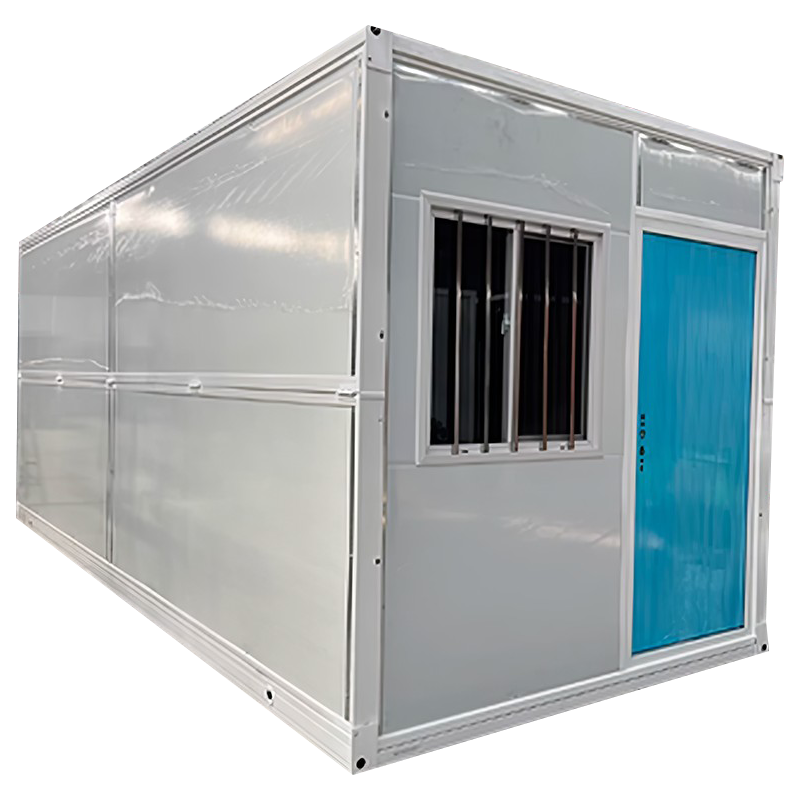
A folding house is distinct from a prefab or modular home, though the categories overlap. All folding houses are prefabricated; not all prefab homes fold. The folding mechanism is the differentiating characteristic — it directly determines transport cost, site access requirements, and deployment speed.
How a Folding House Works: The Core Mechanisms
Several distinct folding mechanisms are used in the industry, each representing a different engineering trade-off between structural rigidity, interior pre-fit complexity, and the speed of on-site deployment.
Accordion / Bi-Fold Panel Systems
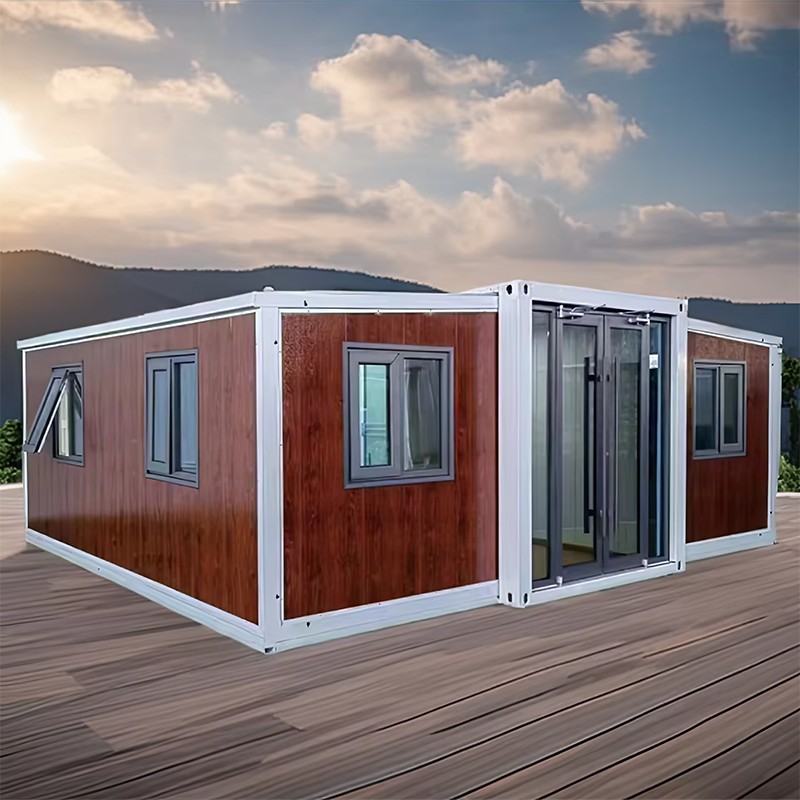
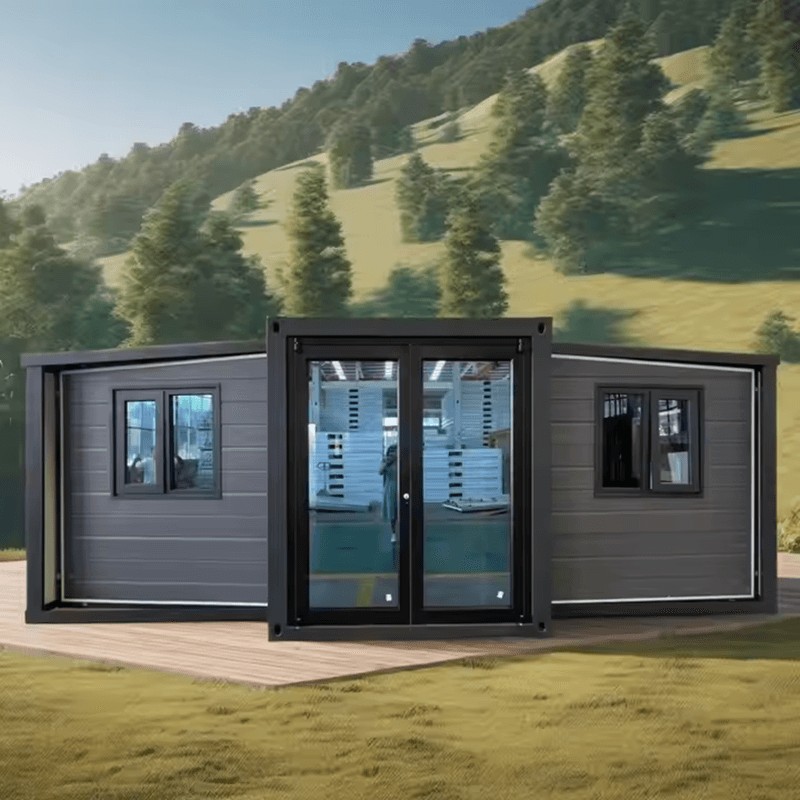
The most common commercial system. Floor, wall, and ceiling panels are connected by heavy-duty piano hinges or concealed barrel hinges and fold accordion-style into a flat stack. On a standard 40-foot shipping container chassis, this produces a transport unit approximately 2.4 m wide × 2.9 m tall × 12 m long. On-site, hydraulic or electric actuators — or a small crane — unfold the walls outward and upward. Accordion-fold houses typically deploy in 3–8 hours with a two-person crew.
Telescoping / Sliding Extension Systems
Rather than folding panels, these systems use telescoping floor sections and sliding wall modules that extend outward from a core unit on roller bearings. The primary advantage is that interior finishes — kitchen units, bathroom pods, floor coverings — can be installed in both the fixed core and the sliding extension sections before transport, since no panel folding is required. Deployed floor area can be 2.5–3× the transport footprint. Sliding extension systems are heavier per square meter than accordion-fold designs and require more precise site leveling.
Origami / Multi-Hinge Flat-Pack Systems
Derived from research in deployable space structures, origami-fold houses use complex multi-hinge panel geometry that allows the entire structure — walls, roof, and floor — to collapse to a single flat panel approximately 200–300 mm thick. These systems are the most compact in transport but require the most precision engineering and are currently limited to smaller structures (typically under 40 m²). Several European and Japanese manufacturers have commercialized origami-fold emergency shelters using this principle.
Scissor-Lift Roof Systems
Used primarily in folding A-frame houses (covered in detail below), scissor-lift mechanisms raise a folded roof from a horizontal transport position to the pitched angle required for rain and snow load management. The wall panels fold outward simultaneously as the roof lifts, often in a single mechanically coupled operation. This is the dominant mechanism for residential folding A-frame designs.
The Folding A-Frame House: Design, Advantages, and Use Cases
The folding A-frame house is the most architecturally distinctive variant of the folding house category. It combines the structural geometry of the traditional A-frame — in which the roofline extends to or near ground level, eliminating conventional exterior walls in favor of the roof-wall surface — with a folding mechanism that allows the entire structure to collapse flat for transport.
In a folding A-frame house, the two triangular roof-wall panels hinge at the ridge and fold downward and inward to lie flat, typically against the floor platform, during transport. End wall panels — which close the gable ends of the triangle — fold or detach for stacking. The result is a transport package that can fit on a standard flatbed truck: a typical 40 m² folding A-frame house transports as a unit approximately 3 m wide × 0.5–0.8 m tall × 9–12 m long.
Structural Advantages of the A-Frame Form
The A-frame geometry is inherently efficient under vertical load: the triangular cross-section converts roof loading primarily into compression along the slope members, which is the load condition structural materials handle most efficiently. This means that an A-frame house can achieve excellent structural performance with less material than a rectangular structure of equivalent floor area — an advantage that amplifies the folding house's goal of maximizing enclosed space relative to material and transport weight.
The steep roof pitch (typically 45–60° in folding A-frame designs) also provides natural snow-shedding without snow guards, excellent rainwater runoff, and — in warm climates — a large air volume above the occupied zone that acts as a thermal buffer. These characteristics make the folding A-frame house particularly suitable for mountain, forest, and lakeside sites where weather exposure is significant.
Interior Layout and Loft Space
The A-frame's triangular interior cross-section produces a ground floor with full standing headroom at the center and progressively lower ceiling heights toward the eaves. Most folding A-frame house designs respond to this geometry in one of two ways: either by elevating the structure on a raised platform to bring the eave line above floor level (creating usable wall-adjacent space), or by designing the lower eave zones as built-in storage, bench seating, or sleeping alcoves. A mezzanine loft level at the upper portion of the triangle is a near-universal feature of residential folding A-frame designs, accommodating a sleeping area or home office within the roof volume.
Glazing and the A-Frame Aesthetic
The gable end walls of an A-frame house are the primary location for windows and glass doors, since the roof-wall surfaces of the sloped sides offer limited glazing opportunity. Full-height glazed gable ends — from floor to ridge — are a signature design element of contemporary folding A-frame cabins, providing panoramic views, passive solar gain on south-facing gables (in the northern hemisphere), and a visual connection to the landscape that drives the product's popularity as a vacation home and glamping accommodation.
Folding House vs. Traditional Construction: A Direct Comparison
| Factor | Folding House | Conventional Build |
|---|---|---|
| On-site construction time | 1–3 days | 3–12 months |
| Weather dependency during build | Minimal (factory built) | High |
| Relocatability | High (re-foldable) | None |
| Site access requirement | Single truck delivery | Multiple vehicle access required |
| Quality control | Factory-controlled | Variable (site conditions) |
| Design flexibility | Moderate (model-based) | Maximum |
| Cost per m² (mid-range) | $800–$1,800 USD | $1,200–$3,500 USD |
| Foundation requirement | Screw piles or point footings | Full slab or strip foundation |
Primary Applications and Markets
Vacation Cabins and Glamping Accommodations
The most commercially active segment for folding houses — particularly folding A-frame houses — is the short-term rental and glamping market. Property investors and hospitality operators deploy folding A-frame cabins on rural land parcels where conventional construction would require expensive road improvements and extended planning timelines. A single folding A-frame unit can be operational as a bookable glamping accommodation within 48 hours of delivery. Platforms like Airbnb and Hipcamp have created direct revenue validation for this model; documented returns of $30,000–$80,000 USD per year per unit are cited in North American and European markets for well-located folding A-frame cabins.
Disaster Relief and Emergency Housing
The speed of deployment that makes folding houses commercially attractive also makes them operationally critical in post-disaster scenarios. Following earthquakes, floods, and wildfires, conventional construction timelines of months to years leave displaced populations in inadequate temporary shelter. Folding houses — particularly accordion-fold units that can be loaded 8–12 per shipping container and deployed by minimally trained local crews — have been evaluated and piloted by UNHCR, the Red Cross, and several national disaster management agencies. The challenge in humanitarian deployment is cost: folding house units with durable structural panels and factory-installed services are significantly more expensive than traditional refugee camp systems, though their lifespan (20–50 years vs. 2–5 years for tents) substantially alters the total cost calculation.
Off-Grid Permanent Residences
A growing segment of buyers is purchasing folding houses as primary residences on rural or semi-rural land where building permits, utility connections, or site access challenges make conventional construction impractical. Folding A-frame houses in this segment are typically ordered with solar-ready electrical systems, rainwater harvesting pre-plumbing, and high-performance insulation packages (U-values of 0.2 W/m²K or better) compatible with net-zero energy operation. The ability to place the structure on screw-pile foundations without a concrete slab significantly reduces site impact and is a key selling point for buyers on ecologically sensitive land.
Workforce Housing and Remote Site Accommodation
Mining operations, forestry companies, construction site managers, and military logistics organizations require habitable accommodation at remote sites where no permanent infrastructure exists. Folding houses — particularly multi-unit accordion-fold configurations — can be deployed to these sites by helicopter sling-load, barge, or standard road transport and provide living conditions substantially superior to traditional prefabricated camp buildings. Relocatability is a primary operational requirement in this market: when a project site closes, the folding house units refold and redeploy to the next location rather than being abandoned or demolished.
Backyard Additional Dwelling Units (ADUs)
In jurisdictions that have liberalized ADU regulations — including California, Oregon, British Columbia, and most of Australia — folding houses are increasingly deployed as backyard granny flats, home offices, and guest suites. The speed of installation (one day vs. 3–6 months for a site-built ADU) and the ability to permit the structure as a relocatable building rather than a permanent dwelling (reducing regulatory burden in some jurisdictions) are the primary drivers. Folding A-frame ADUs in the 25–45 m² range represent a significant growth sub-segment in this market.
Construction Materials Used in Folding Houses
The material selection in a folding house must satisfy two conflicting requirements simultaneously: sufficient rigidity for structural performance when deployed, and sufficient flexibility at the hinge lines to fold repeatedly without fatigue failure. This constraint drives material choices that differ significantly from conventional construction.
- Light gauge steel frames (LGS): The dominant structural system for folding houses. Cold-formed steel sections (typically 1.2–2.0 mm thickness) form the panel frames; the hinge connections are engineered as discrete heavy-gauge pivot points rather than continuous flexible members. LGS folding house panels achieve a structural span of 3–4 m with frame weight of 15–25 kg/m².
- Cross-laminated timber (CLT) and structural insulated panels (SIPs): Used in premium folding house products where thermal performance and interior aesthetics are priorities. CLT panels are heavier than LGS frames but offer superior acoustic performance, natural interior surfaces, and carbon sequestration credentials. SIPs combine the structural skin and insulation in one panel, reducing assembly steps.
- Aluminum composite panels (ACP): Commonly used as exterior cladding on folding A-frame houses, particularly on the sloped roof-wall surface. ACP provides weather resistance, low maintenance, and — in mill-finish or anodized variants — a contemporary aesthetic at relatively low weight (3–5 kg/m²).
- ETFE film and polycarbonate glazing: Used for gable-end glazing in folding A-frame houses. Both materials are lighter than glass, have higher impact resistance, and can be curved to follow the A-frame's triangular geometry. ETFE film panels allow 95% light transmission and are used in high-end architectural folding A-frame products.
- High-performance insulation: PIR (polyisocyanurate) rigid foam boards or aerogel blankets are preferred over mineral wool in folding house panels because they achieve the required thermal resistance in a thinner panel depth — critical for minimizing folded transport dimensions.
Planning Permission and Building Code Considerations
The regulatory status of folding houses varies considerably between jurisdictions and is one of the most frequently raised questions among prospective buyers. The key regulatory determination is whether the structure is classified as a permanent dwelling, a temporary structure, or a relocatable building — a classification that determines which building code applies, whether planning permission is required, and what foundation and utility connection standards must be met.
In most jurisdictions, a folding house intended as a primary residence is treated as a permanent dwelling and must comply with the same energy efficiency, structural, fire safety, and accessibility standards as a conventionally built home. Factory-built folding house manufacturers typically hold third-party structural engineering certifications for their standard models, which simplifies the building permit process. ISO 9001-certified manufacturing processes and CE marking (in the EU) or HUD code compliance (in the U.S.) are the standard credentials buyers should verify before purchase.
In Australia, New Zealand, and Canada, folding houses are often permitted under "relocatable building" or "transportable home" regulations that provide a faster approval pathway than standard building consent, provided the unit carries a manufacturer's compliance statement and is placed on an approved foundation system. Buyers in these markets should confirm with their local council before purchase rather than assuming a particular regulatory pathway will apply.
What to Look for When Buying a Folding House
The folding house market includes products at significantly different quality and price levels. Evaluating a manufacturer's offering against the following criteria helps buyers distinguish durable long-term investments from products that are attractive in marketing materials but underspecified for real conditions.
- Structural certification: Verify that the folding house model has been certified by a licensed structural engineer for the wind, snow, and seismic loads of your specific location. Do not accept general certification statements without seeing the load ratings and applicable standards.
- Hinge cycle testing: Ask the manufacturer how many fold-unfold cycles the hinge system has been tested to. A quality folding house should have hinge components rated for a minimum of 50–100 full deployment cycles without structural degradation.
- Insulation U-values: Request the U-value (W/m²K) for walls, roof, and floor as tested to ISO 6946 or equivalent. Values above 0.3 W/m²K indicate inadequate insulation for year-round occupancy in temperate climates.
- Interior pre-installation: Clarify exactly what is installed inside the folded panels at the factory and what remains to be connected or installed on-site. "Fully finished" claims vary considerably between manufacturers.
- Transport dimensions and weight: Confirm the folded dimensions and gross transport weight, and verify these are compatible with road transport regulations and your site access constraints before ordering.
- Warranty terms: A 10-year structural warranty on the frame and folding mechanism and a 2-year warranty on installed fittings are reasonable minimums. Shorter warranties suggest lower manufacturing confidence.
- References and installed examples: Request contact details for customers who have had their folding house deployed for at least two years. Weather performance, hinge durability, and insulation effectiveness are difficult to assess without real-world longevity data.