 English
 русский
 Français
 Español
 عربى
عربى

Content
- 1 Direct Comparison: Core Structural Approaches
- 2 Structural Framework: Engineering Fundamentals
- 3 Thermal Performance and Insulation
- 4 Durability and Environmental Resistance
- 5 Transportation and Deployment Logistics
- 6 Application-Specific Recommendations
- 7 Economic Analysis and Cost Considerations
- 8 Sustainability and Environmental Impact
- 9 Final Selection Framework
Direct Comparison: Core Structural Approaches
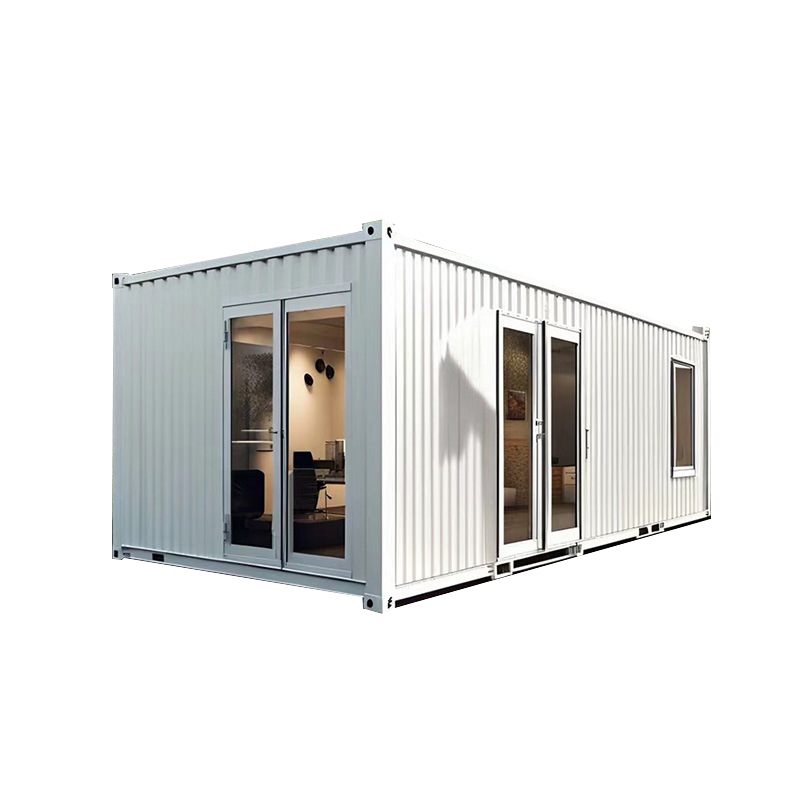
Steel structure container houses utilize Corten steel shipping containers as the primary load-bearing framework, offering exceptional durability and seismic resistance with service lifespans of 30-50 years. Sandwich panel container houses employ lightweight steel frames clad with insulated sandwich panels, delivering superior thermal performance and rapid deployment capabilities at lower weight profiles. Your selection should prioritize structural longevity and mobility for steel structure designs, or energy efficiency and installation speed for sandwich panel systems.
Structural Framework: Engineering Fundamentals
Steel structure container houses derive their strength from repurposed ISO shipping containers constructed of Corten steel or ASTM A36 grade steel with minimum yield strength of 250 MPa. These containers are originally engineered to withstand harsh maritime environments, supporting stacking loads of 80-150 metric tons when properly anchored. The corner castings and longitudinal beams provide inherent structural integrity that requires minimal additional reinforcement for residential applications.
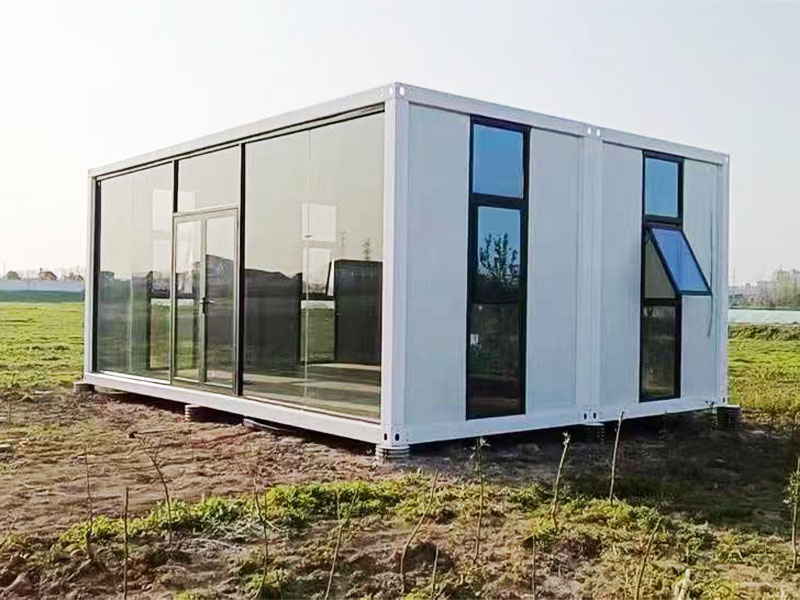
Sandwich panel container houses utilize galvanized steel frames typically 1.6-2.0mm in thickness, forming a skeleton structure that supports insulated wall and roof panels. The sandwich panels consist of two durable outer layers of galvanized steel or aluminum bonded to insulating cores such as polyurethane, mineral wool, or polystyrene. This construction method reduces overall weight to approximately 1,000 kg for a standard 20-foot unit compared to 2,300 kg for an empty steel container.
Load-Bearing Capacity Analysis
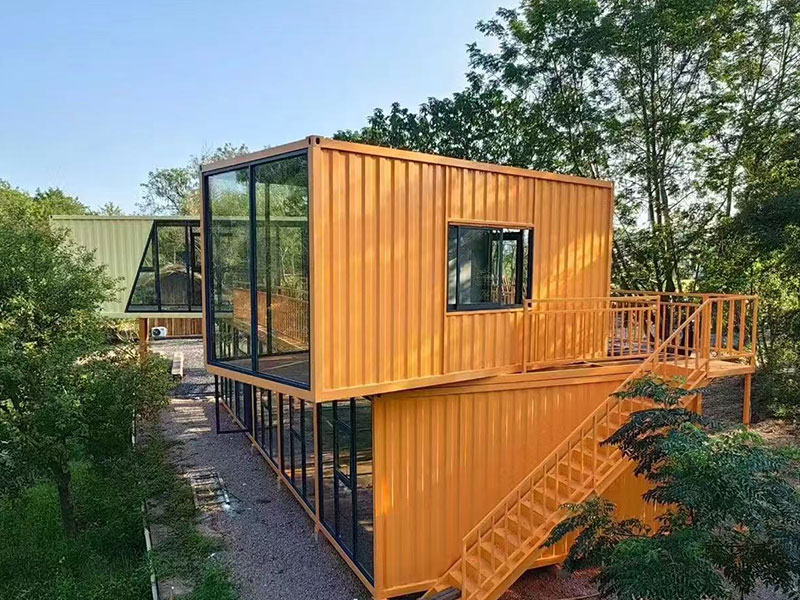
Steel structure containers maintain exceptional load-bearing characteristics with floor load capacities of 2,000-4,000 kg per square meter and roof loads of 300-600 kg per square meter. The rigid box structure distributes loads evenly across all six faces, enabling safe vertical stacking up to 8 containers high without intermediate support.
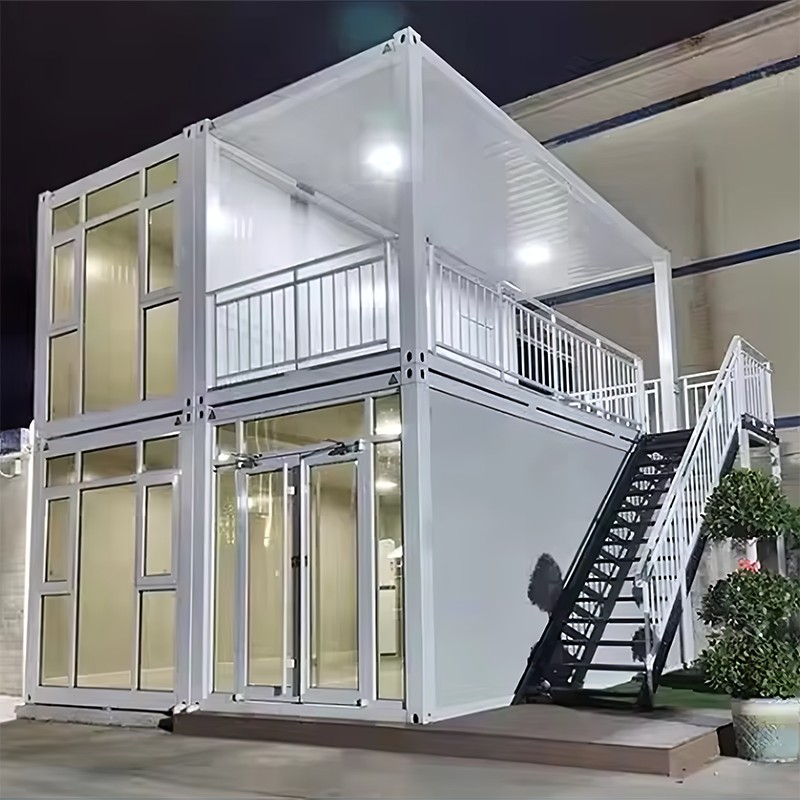
Sandwich panel containers rely on the steel frame for primary structural support, with load distribution concentrated at frame junctions rather than distributed across panel surfaces. While suitable for single-story and limited multi-story applications, these structures typically achieve maximum stacking heights of 2-3 levels with proper engineering reinforcement. Floor load ratings generally range from 200-500 kg per square meter depending on frame specifications.
Thermal Performance and Insulation
The thermal performance characteristics of these container types differ significantly due to their construction methodologies. Steel structure containers conduct heat rapidly through metal surfaces, creating substantial thermal bridging that requires comprehensive insulation strategies. Without proper insulation, interior temperatures can fluctuate dramatically, leading to condensation issues and energy inefficiency.
Sandwich panel containers integrate insulation directly into the wall and roof assemblies, achieving R-values of 3.5-5.0 with 75-100mm polyurethane foam cores. The continuous thermal envelope minimizes thermal bridging at connections, delivering superior energy efficiency that can reduce HVAC costs by 30-50% compared to uninsulated steel structures. Mineral wool cores provide additional fire resistance while maintaining acoustic dampening properties.
| Performance Metric | Steel Structure Container | Sandwich Panel Container |
|---|---|---|
| Unit Weight (20ft) | 2,300-3,800 kg | 1,000-1,500 kg |
| Insulation R-Value | Requires addition (R-13 to R-30) | Integrated (R-3.5 to R-5.0) |
| Stacking Height | Up to 8 levels | 2-3 levels typical |
| Service Lifespan | 30-50 years | 15-25 years |
| Deployment Time | 2-8 weeks | 1-2 hours to days |
Durability and Environmental Resistance
Steel structure containers demonstrate exceptional durability against environmental stressors. Corten steel develops a protective oxide layer that prevents further corrosion, while hot-dip galvanizing with 85-140 micrometer zinc coatings provides additional protection for structural elements. These containers withstand wind speeds up to 150 mph when properly anchored and resist seismic forces through their rigid box configuration. The impervious steel construction eliminates concerns regarding termites, mold, and wood-boring pests.
Sandwich panel containers utilize corrosion-resistant coatings on steel frames and weatherproof cladding materials, though long-term durability depends heavily on sealant integrity at panel joints. The lightweight construction performs adequately in moderate wind conditions but requires enhanced anchoring systems for high-wind zones. Panel degradation from UV exposure and thermal cycling may necessitate replacement after 15-20 years, particularly for polystyrene core materials.
Fire Safety Considerations
Steel structure containers inherently resist fire spread through their non-combustible steel construction. When combined with mineral wool or fire-rated insulation, these structures achieve superior fire resistance ratings suitable for high-safety environments. The metal framework maintains structural integrity at elevated temperatures, providing critical evacuation time during fire events.
Sandwich panel fire performance varies significantly by core material selection. Mineral wool cores provide excellent fire resistance and are suitable for high-risk applications. Polyurethane cores offer moderate fire resistance with self-extinguishing properties. Polystyrene cores present higher fire risks and are generally restricted to temporary or low-occupancy applications. All sandwich panel installations require careful attention to fire stops at penetrations and junctions to prevent flame spread within wall cavities.
Transportation and Deployment Logistics
Steel structure containers leverage standardized ISO dimensions enabling transportation via truck, rail, or ship using standard lifting points and handling equipment. The robust construction withstands the rigors of international shipping without structural degradation. However, the substantial weight requires appropriate lifting equipment and may limit placement options on sites with poor access or weight-restricted foundations.
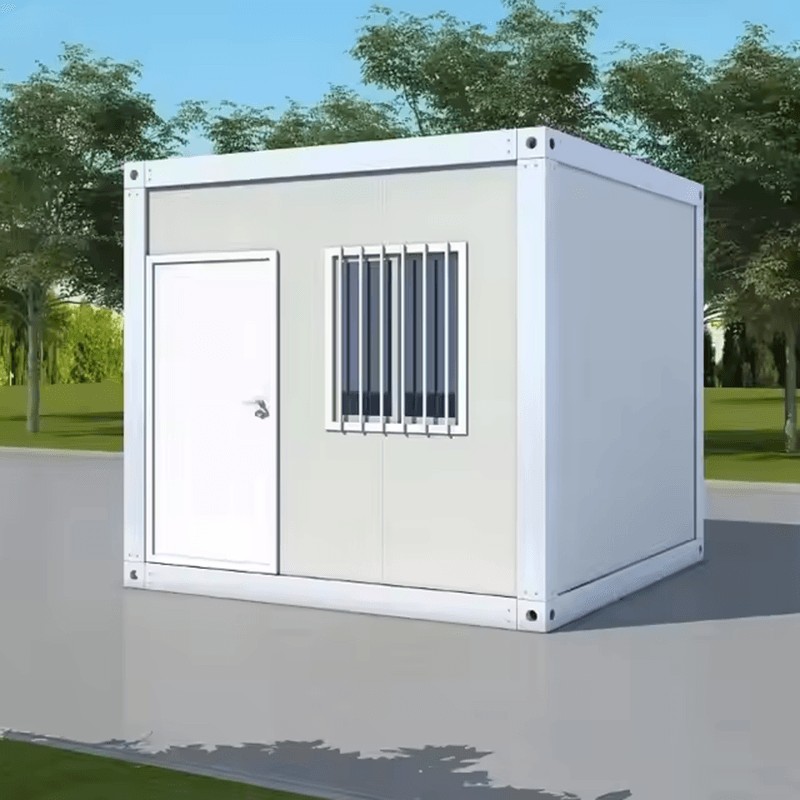
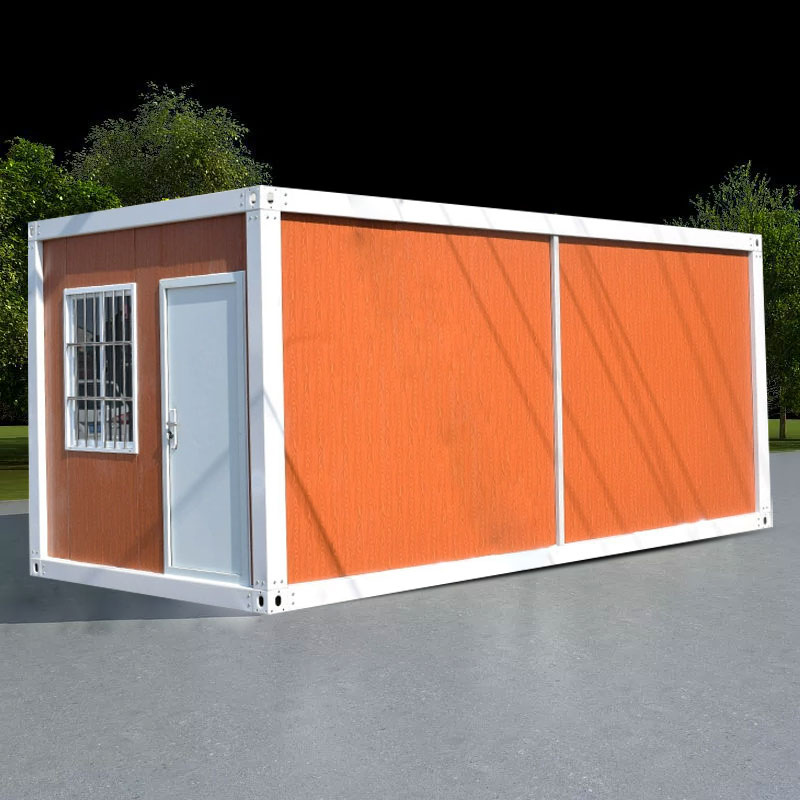
Sandwich panel containers offer superior transport efficiency through collapsible or flat-pack designs that reduce shipping volume by up to 70%. A standard 20-foot folding container collapses to 0.45 meters in height, enabling transport of multiple units on a single truck. On-site deployment requires 15-30 minutes with 2-3 personnel using simple hand tools, eliminating the need for cranes or heavy equipment. This rapid deployment capability makes sandwich panel systems ideal for emergency response and temporary applications.
Application-Specific Recommendations
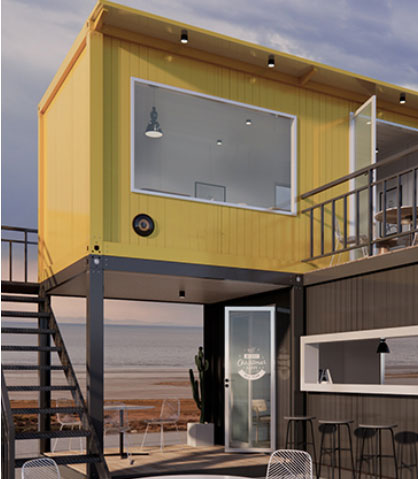
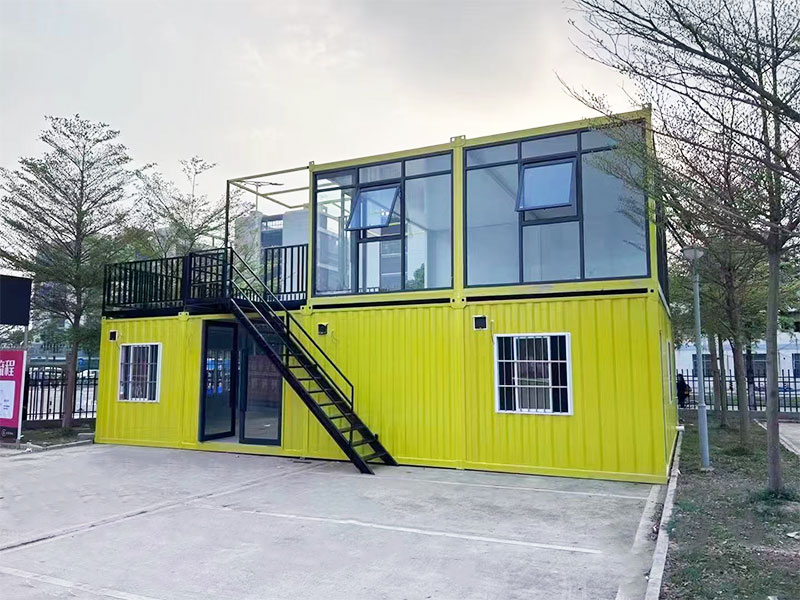
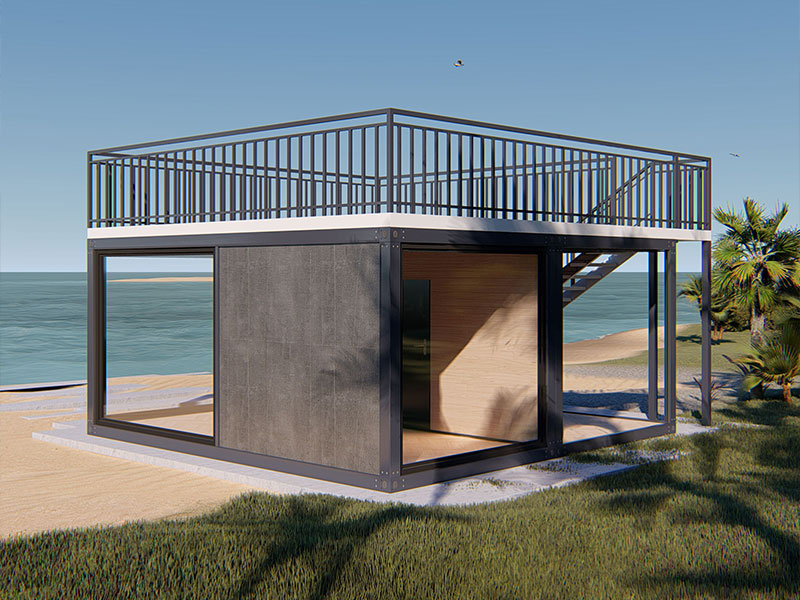
Steel structure container houses excel in permanent residential applications, commercial buildings, and multi-story developments where structural longevity and design flexibility take priority. The robust framework accommodates extensive modifications including large window openings, mezzanine installations, and rooftop additions without compromising structural integrity. These units serve effectively as family homes, office complexes, educational facilities, and healthcare clinics in both urban and remote locations.
Sandwich panel container houses dominate temporary and mobile applications including construction site offices, worker dormitories, emergency shelters, and event facilities. The lightweight construction and rapid deployment capabilities support disaster relief operations, military installations, and seasonal tourism accommodations. Foldable variants enable frequent relocation with minimal logistical overhead, while modular configurations allow scalable expansion as requirements evolve.
Industry Usage Patterns
Mining operations and remote work camps increasingly specify sandwich panel dormitories for their rapid deployment and relocation capabilities. These facilities typically require 6-12 month installation periods with frequent site transfers, making the lightweight construction and folding mechanisms economically advantageous despite shorter service lifespans.
Urban infill projects and sustainable housing developments favor steel structure containers for their permanent construction classification and aesthetic adaptability. The industrial-chic appearance of exposed container architecture appeals to design-conscious markets, while the structural robustness satisfies building code requirements for permanent occupancy. High-end residential applications often combine multiple containers in sophisticated configurations with premium interior finishes.
| Application Category | Recommended Type | Primary Rationale |
|---|---|---|
| Permanent Residential | Steel Structure | Longevity and code compliance |
| Construction Site Offices | Sandwich Panel | Rapid deployment and relocation |
| Multi-Story Buildings | Steel Structure | Load-bearing capacity |
| Emergency Shelters | Sandwich Panel | Speed of installation |
| Remote Work Camps | Sandwich Panel | Transport efficiency |
| Luxury Residences | Steel Structure | Design flexibility and durability |
Economic Analysis and Cost Considerations
Initial acquisition costs for steel structure containers range from $2,500 to $6,000 for one-trip containers in good condition, with additional expenses for cutting, welding, insulation, and interior finishing bringing total project costs to $15,000-50,000 per unit depending on specification levels. The higher upfront investment delivers lower lifecycle costs through extended service life and minimal maintenance requirements.
Sandwich panel containers offer lower initial costs, typically 20-40% less than fully converted steel containers, with basic units available for $5,000-15,000 including integrated insulation. However, the shorter service lifespan and potential panel replacement costs over 15-20 years may offset initial savings for permanent installations. The reduced transport costs and rapid installation provide significant economic advantages for temporary applications with frequent relocation cycles.
Maintenance Requirements
Steel structure containers require biannual inspections for rust development, weld integrity, and sealant degradation. Surface rust treatment involves wire brushing, priming, and recoating with anti-corrosive paints such as zinc silicate or polyurethane enamel. Repainting faded or chipped surfaces every 5-7 years maintains aesthetic appearance and corrosion protection. Properly maintained steel containers demonstrate exceptional longevity with minimal structural degradation.
Sandwich panel containers require periodic inspection of panel joints, sealants, and folding mechanisms. Reapplication of sealants around panel junctions every 2-3 years prevents moisture ingress and maintains thermal performance. Panel replacement may become necessary after 15-20 years due to UV degradation or thermal cycling fatigue. The lightweight construction requires careful handling during relocation to prevent frame distortion or panel damage.
Sustainability and Environmental Impact
Steel structure containers contribute significantly to circular economy principles by repurposing approximately 36,000 lbs of steel per container that would otherwise enter scrap streams. The recycling process reduces demand for virgin building materials and can save up to 15 tons of CO2 emissions during construction compared to conventional building methods. The extended service lifespan further enhances environmental performance through reduced replacement frequency.
Sandwich panel containers incorporate up to 80% recycled steel content in frame construction and utilize factory prefabrication to reduce construction waste by up to 70% compared to traditional builds. The lightweight design reduces transportation emissions, while the modular nature enables reuse across multiple projects. However, end-of-life disposal of composite sandwich panels presents recycling challenges due to the bonded multi-layer construction.
Final Selection Framework
The optimal container house selection requires systematic evaluation of project duration, mobility requirements, climate conditions, and budget constraints. For permanent installations exceeding 10 years in fixed locations, steel structure containers deliver superior lifecycle value despite higher initial costs. The structural robustness accommodates extensive customization and ensures compliance with permanent building codes.
For temporary applications, frequent relocation, or rapid deployment scenarios, sandwich panel containers provide compelling advantages in transport efficiency and installation speed. The integrated insulation and lightweight construction suit applications where mobility and speed outweigh longevity requirements. Conducting a total cost of ownership analysis over the projected service life will clarify the economic optimal solution for your specific application.